

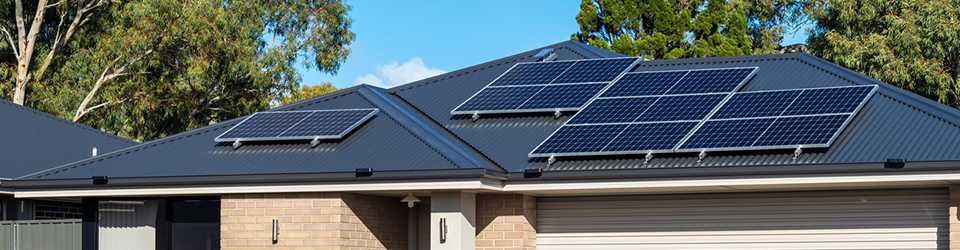
The net metering program allows you to generate up to 100 kilowatts (kW) of power using an eligible energy resource. This allows you to offset your power use while being able to use power from our grid.
Find out how to apply for the program and if you're eligible for net metering.
No, there are no rebates or programs offered by SaskPower to install residential solar panels. We suggest researching to see if there are other grants or incentives that could help lower your costs for solar panel systems.
The payback period depends on several things, including:
- Installation costs (including any financing or loan costs)
- Maintenance costs over time
- How much electricity you use compared to the size and type of system you install
- How much of your solar energy you use yourself versus how much you send to SaskPower
- System performance (how well it produces energy)
- Future electricity prices and the price SaskPower pays for extra energy
If you are working with a solar vendor, ask them the assumptions that they have utilized in the payback period they have calculated for your project. Do some research to understand the answers to each of these questions specifically for your location and the time of day or year you consume more power.
Tip: A system that’s sized so you use most of the energy you produce—rather than selling a lot back—usually gives you the best payback.
Calculate your payback period
- Step 1: Determine your costs
Once you have a quote from your contractor, subtract the value of any federal/provincial grants and rebates from the total cost of your system and add any financing costs. We recommend getting at least 2 or 3 quotes and to be wary of estimates that promise quick paybacks. - Step 2: Determine your annual cost savings
Calculate your annual financial benefits, including your avoided electricity usage at your current electricity rate, and add any additional benefits, including any excess energy sold to us.
Annual cost savings formula:
(energy produced x percent of energy used x current electricity rate) + (energy produced x percent of energy sold to us x excess energy purchase price) - Step 3: Calculate the payback period
Divide the total cost of your system from Step 1 by your annual financial benefits from Step 2 to calculate the number of years it will take for you to achieve your payback.
Yes, we complete an interconnection study as part of the application process. The study isn’t an administrative step or an automatic approval. It answers the core technical question: Can this generation system safely and reliably connect to SaskPower’s grid at the proposed location?
It helps you better understand the impact of your chosen system. It’ll also identify if there are any grid updates needed to hook into our grid, as well as other considerations for the location. If any upgrades are needed, they’ll be at your cost.
No. The interconnection study fee pays for SaskPower’s assessment of your proposed project. The study determines whether your generation system can be safely and reliably connected to the power grid at your proposed location. Approval is not automatic. The study may identify upgrades or other requirements needed for connection, and some projects may not be approved at the proposed location.
A bi-directional meter is installed for all net metering customers. It records your power flow in 2 directions:
- The power you use from our power grid to your home
- The power you generate and send to our power grid
When you set up your system, we’ll install a bi-directional meter. This meter is required for all net metering systems. You’re responsible for the cost of the bi-directional meter.
You may only energize your solar system once both of the following requirements are met:
- Your electrical inspection by TSASK is complete, and
- SaskPower has completed the required bi‑directional meter work.
The order of these steps does not matter; however, both must be completed before your system is turned on. Energizing your system before meeting these requirements can create safety risks and result in incorrect billing.
When SaskPower installs your bi-directional meter, your account is set up for the Net Metering program. This happens even if your TSASK Electrical Inspection isn’t done yet. Until that inspection is approved, you cannot turn on your system, so your bill will show 0 kWh of generation.
This is normal. It won't change the charges on your bill prior to your system being energized.
This is normal. The app or inverter will show more generation than on your power bill. The system will show the total generation. This includes what you use and the extra power sent to our grid.
Your power bill only shows the power that travels through the meter (to and from the premise). We don’t have insight into how much power you generate and use as it’s not measured through the meter.
Be mindful of the time period tracking. Most apps or systems track monthly. Our billing cycle timing varies based on when you started service. This could account for different days.
- kW (kilowatt): A measure of power, or the rate at which electricity is generated or consumed. For example, a solar panel system with a capacity of 5 kW can produce up to 5 kW of power at any moment.
- kWh (kilowatt-hour): A measure of energy, or the total amount of electricity generated or consumed over time. For example, if a 5 kW system runs at full capacity for 2 hours, it produces 10 kWh of energy.
Your system’s size (in kW) determines how much power it can produce at any instant, while your bill and credits are based on the total energy (in kWh) you generate and use.
Those who signed up after November 2019 – your credits don’t expire.
Those who signed up before November 2019 – credits expire every 3 years.
Yes. The program can help reduce your power bill – it’s important to know it won’t eliminate it.
Yes. Check out our Tips and Tricks guide for practical advice on maximising your solar generation and benefits.
No. We recommend reaching out to several vendors to compare costs and services.
Ensure you understand the net metering program and know how the billing and credits work.
Note: the terms and conditions of the net metering program may be different than the previous owners.
If you purchase the property, when you contact SaskPower to connect service, you’ll automatically be enrolled in the existing program under the terms and conditions applicable at the time of enrolment. You can expect to receive a copy of the Terms & Conditions for signature the following calendar month from when you connected service.
To get access to the production data of your system, you should first attempt to contact the original installer/provider of their system. The installer will have direct access to update and transfer ownership of the online monitoring. Alternatively, if that is no longer possible, then the homeowner can contact the inverter manufacturer with their address, contact information, and inverter and/or inverter data control unit serial number(s). Different inverter manufacturer's have varied transfer processes. Please check with those providers for their change of ownership instructions as additional information may be required.
You’ll need to reapply for the program and go through the same process as you previously did.
Since extra generation could have impacts to our grid and require updates, we’ll need to do an interconnection study. TSASK will also require a system review, permits and an electrical inspection.
Your existing contract including your terms and conditions will be terminated. You’ll require a new contract for your expanded system.
Note: Your bi-directional meter will remain the same.
Just continue with our normal ‘stop service’ process. There’s nothing extra you need to do! Learn more about how to stop service.
Your current net metering contract will be cancelled and cannot be transferred to your new property. The new owner will automatically be enrolled in the program with applicable terms and conditions.